
Measure the levator scapulae with a handheld stiffness device placed on the posterolateral neck, patient seated and relaxed, taking several averaged readings at a marked site. Reliability is good in people without neck pain but drops in chronic cases, so treat one reading as a data point, not a verdict.
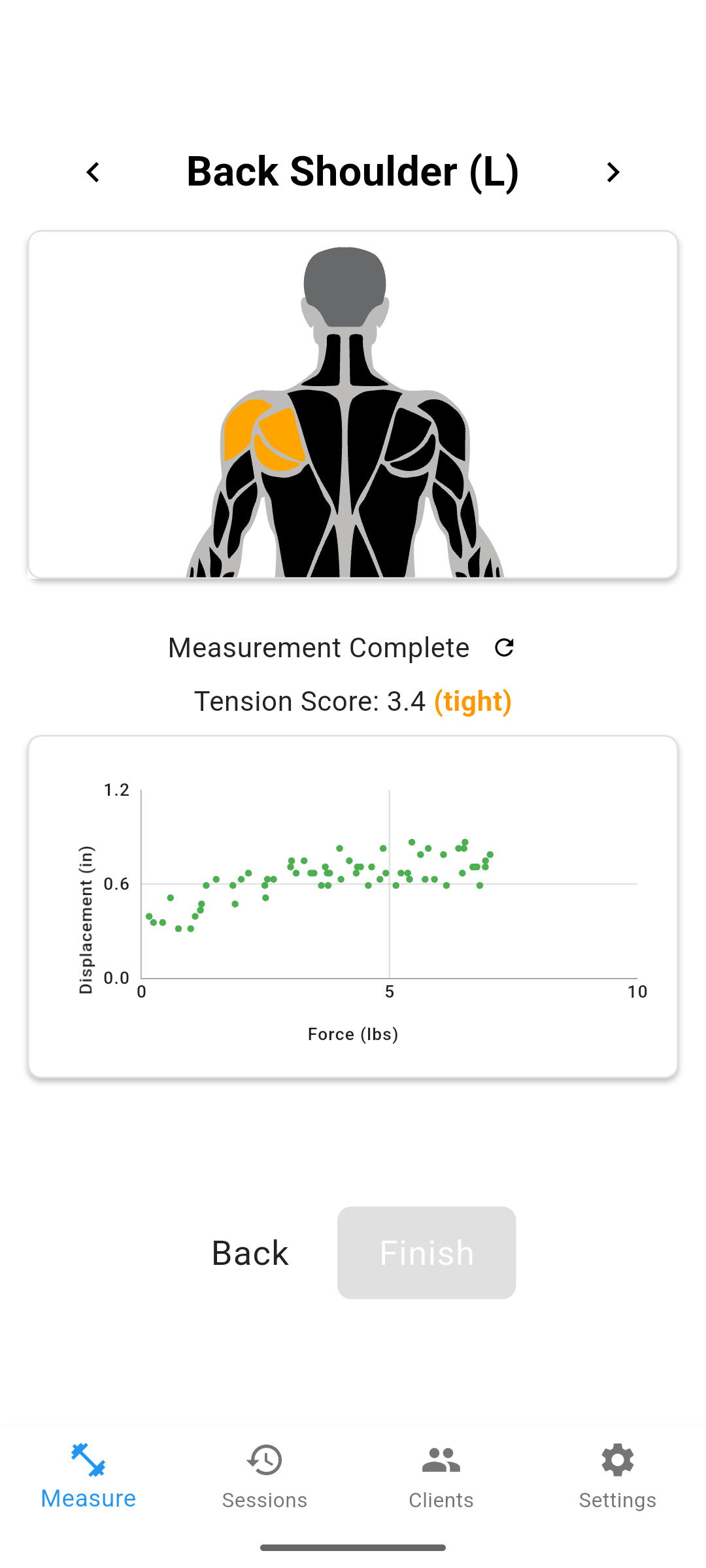
Where Is the Levator Scapulae and How Do You Access It?
The muscle runs from the upper cervical transverse processes down to the superior medial corner of the scapula. The reliable measurement window is along the posterolateral neck, just above and slightly medial to the upper trapezius. Seat the patient with the head in neutral and the shoulders relaxed. Mark the spot with a skin pencil so every follow-up reading lands on the same fibers. Small shifts in placement change the number, so consistency matters more than picking the perfect point.
How Reliable Is the Measurement?
Reliable enough to track healthy tissue, but weaker in the patients you most want to assess. A 2024 study in Sensors using shear wave elastography reported moderate-to-good inter-examiner reliability for levator scapulae stiffness in people without symptoms, but only poor-to-moderate reliability in patients with chronic neck pain. The practical takeaway is to average several readings and to lean on the trend across visits rather than any single value in a symptomatic patient.
Does a Stiffer Reading Mean the Patient Has Neck Pain?
No, and the data is clear on this. The same 2024 Sensors analysis found no significant difference in levator scapulae elasticity between people with and without chronic neck pain, and no difference by sex or side. A 2020 JOSPT study reached a similar conclusion for neck muscles overall: measured stiffness did not correlate with pain intensity. A reading may reflect tissue state, but it does not diagnose pain.
| Step | What to do |
|---|---|
| Position | Patient seated, head neutral, shoulders relaxed |
| Site | Posterolateral neck, above and medial to upper trapezius; mark it |
| Readings | Take at least three, average them, repeat on the other side |
| Follow-up | Re-measure at the same site and position each re-exam |
| Interpretation | Read the trend, not one number; pair with a pain or disability score |
Survey data: In a 2026 survey of 455 patients who stopped chiropractic care, 58% cited perception-based reasons: 36% felt no progress, and 22% felt better and stopped. A tracked stiffness trend on a specific muscle gives a neck pain patient something concrete to follow rather than relying on how the area feels on a given day.
Frequently Asked Questions
Where do you place the device to measure the levator scapulae?
The levator scapulae runs from the upper cervical transverse processes to the superior medial border of the scapula. The accessible measurement point is along the posterolateral neck, just above and medial to the upper trapezius. Have the patient seated and relaxed with the head neutral, and mark the spot so follow-up readings hit the same place.
How reliable is levator scapulae stiffness measurement?
Reliability is moderate to good in people without neck pain but drops to poor-to-moderate in patients with chronic neck pain, according to a 2024 study using shear wave elastography. Take several readings and average them, and treat a single reading in a symptomatic patient with caution.
Does a stiffer levator scapulae mean the patient has neck pain?
Not necessarily. The 2024 study found no significant difference in levator scapulae elasticity between people with and without chronic neck pain. A reading is one data point about tissue state, not a diagnosis of pain.
How many readings should you take?
Take at least three readings at the same marked site and average them. Repeat on the opposite side so you can compare left and right. Averaging reduces the influence of small placement differences.
How do you track change over time in the levator scapulae?
Record a baseline reading at the same body position and marked site, then re-measure at each re-exam under the same conditions. Compare the trend across visits rather than reading too much into any single number.
Should you rely on stiffness readings alone for a neck pain patient?
No. Pair the stiffness reading with a validated pain or disability measure such as the Neck Disability Index. Stiffness and pain are independent, so tracking both gives you a more complete picture than either alone.
One approach is to add a second channel of objective data alongside subjective pain reports. Options include soft tissue stiffness measurement (such as MuscleMap), range-of-motion testing, and posture analysis. Each gives you something concrete to show the patient rather than asking them to take your word for it.