
Respond by re-measuring before you reassure. A plateau is a claim about change over time, so answer it with the change over time. Pull the patient's baseline scores, re-test on the spot, and compare. The data tells you whether this is a real plateau, a perception gap, or a sign the plan needs to change. In a 2026 survey of 455 patients, 36% who quit care said they felt no progress.
One caveat on the re-test: take it before you treat, not after. A 2025 study in the Journal of Bodywork and Movement Therapies found that cervical traction significantly reduced upper trapezius stiffness while the pull was applied, and that every measured site returned to baseline once the session ended. A reading taken right after passive treatment may reflect a temporary state, which manufactures a rebound that looks like a plateau at the next visit.
Why does the response start with measurement, not reassurance?
Because "I have plateaued" is a statement about a trend, and you can only answer a trend with data. Reassurance without numbers is just your opinion against the patient's feeling. If you re-test and show the actual trajectory, the conversation moves from a debate about feelings to a shared look at evidence.
Patients rarely track their own progress accurately. Pain pulls attention. Early in care it dominates, so improvement feels obvious. Later, as pain recedes, attention drifts and the rate of change feels flat even when measured progress continues. Without a baseline to compare against, "I have plateaued" is impossible to verify or correct.
What are the three things a plateau can actually mean?
The word "plateau" hides three different situations. Your job is to figure out which one you are looking at before you respond.
| What the patient feels | What the data shows | What it likely means |
|---|---|---|
| Stuck, no progress | Scores still improving since baseline | Perception gap. Show the trend. |
| Stuck, no progress | Scores flat since last re-exam | Real plateau. Change the plan. |
| Stuck, no progress | Scores worse than baseline | Regression. Reassess or refer. |
Each row leads to a different conversation. You cannot tell them apart from the patient's words alone. That is why the first move is always to re-measure, not to talk.
What do you say when the data shows the patient is still improving?
Show them the gap between their feeling and the numbers. If the Neck Disability Index dropped from 36 to 22, or paraspinal stiffness fell since the first visit, that change is the answer. You are not arguing with the patient. You are giving them a documented reference point that their memory cannot provide.
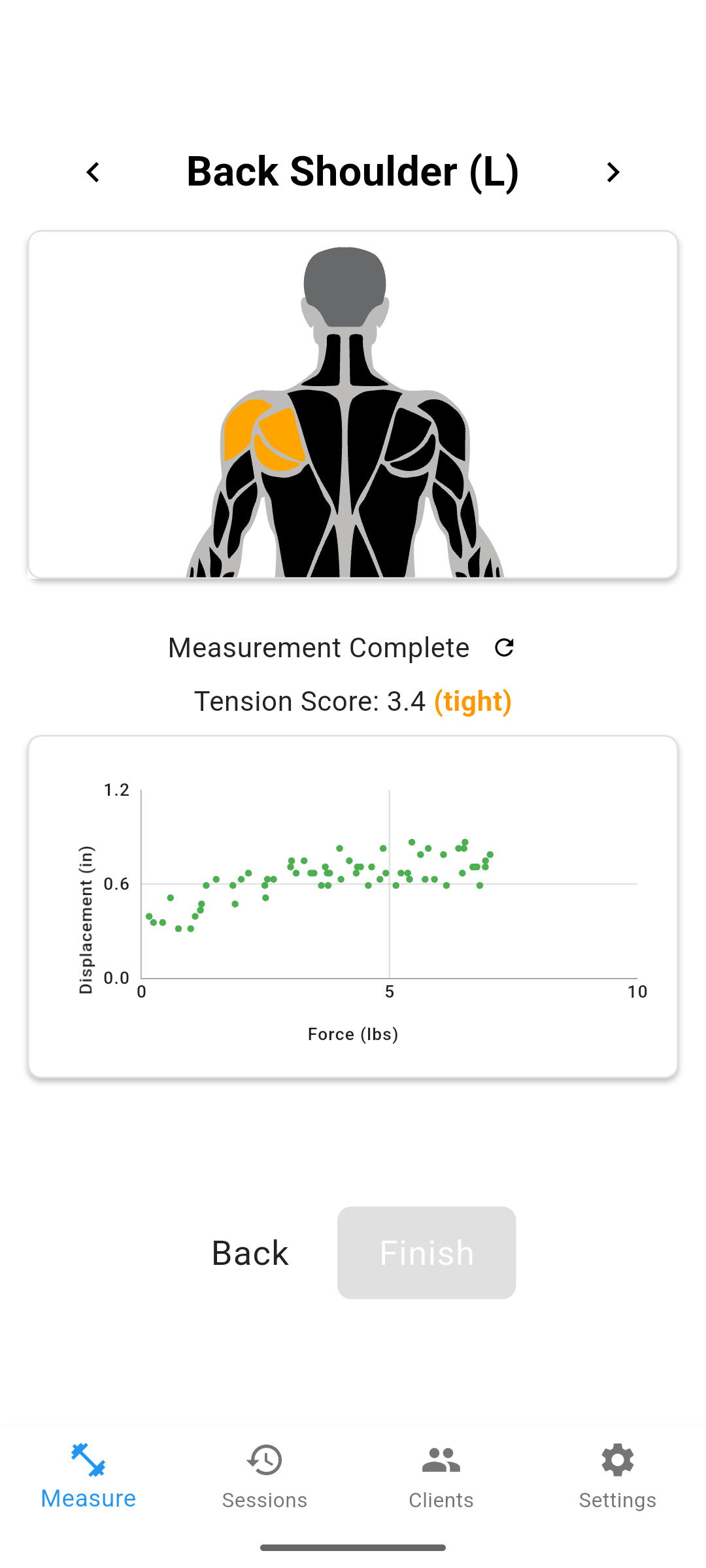
This is where a second, objective channel of data helps. A patient may discount their own pain rating because it feels subjective. A stiffness reading taken at baseline and again today may carry more weight, because it is not a number the patient produced themselves. The point is to give the patient something concrete to look at, not to win an argument.
Survey data: In a 2026 survey of 455 patients who stopped chiropractic care, 58% cited perception-based reasons: 36% felt no progress, and 22% felt better and stopped. Both groups were responding to perception, not to a documented measurement. A re-test at the moment a patient says "I have plateaued" addresses the exact gap that drives the first group out the door.
What do you do when it is a real plateau?
Sometimes the data confirms the patient. Improvement has genuinely slowed or stopped. This is a decision point, and repeating the same visit is not the answer.
Response to spinal manipulation varies between patients. A 2025 randomized trial in JAMA comparing spinal manipulation and biopsychosocial self-management against guideline-based medical care found no significant difference in pain intensity across groups at one year. A 2025 review in The Lancet Rheumatology on long-term outcomes for chronic low back pain reported similar variability, with some patients plateauing well short of full resolution. A plateau in some patients is expected, not a sign you did something wrong.
When the plateau is real, options include adjusting the treatment approach, addressing home-exercise adherence, shifting the goal from symptom reduction to maintaining gains, or referring for co-management. Honesty about the ceiling keeps the patient engaged better than promising improvement the data does not support.
How do you keep a plateaued patient from disengaging?
Reset the goal so it matches reality. A patient who expected to reach zero pain and stalled at a 3 out of 10 will feel like they failed, even though a 3 may be a good outcome for their case. Name the new goal directly: maintain the gain, protect function, manage flare-ups. A clear, achievable target beats an open-ended plan the patient quietly gives up on.
Frequently Asked Questions
What should you do first when a patient says they have plateaued?
Re-measure before you respond. Pull the patient's baseline scores and any objective data, then re-test on the spot. A plateau is a claim about change over time, so answer it with the change over time rather than reassurance.
Is a plateau the same as treatment failure?
No. A plateau means improvement has slowed or stopped, which can mean the patient reached a realistic ceiling, the plan needs adjusting, or you are tracking the wrong metric. Treatment failure is a separate finding that requires reassessment or referral.
What if the patient feels stuck but the data shows improvement?
Show them the trend. Perceived plateaus often reflect attention shifting away from pain as it improves. If a disability score dropped or stiffness fell since baseline, that gap between feeling and data is the conversation, and concrete numbers reset expectations.
What if both the patient and the data show no change?
Treat that as a real plateau and act on it. Change the plan, address adherence, or consider referral or co-management. A genuine plateau confirmed by data is a decision point, not a reason to keep repeating the same visit.
Does spinal manipulation work the same for every patient?
No. Response varies between individuals, and a 2025 JAMA trial found no significant pain difference for manipulation versus medical care in adults at risk of chronic low back pain. Variability in response is expected, so plateaus in some patients are normal.
How do you keep a patient engaged after a real plateau?
Be honest about the ceiling and shift the goal. Move from symptom reduction to maintaining gains, function, or self-management. Patients stay engaged when the plan reflects reality rather than promising endless improvement.
Can inconsistent measurement timing create a fake plateau?
Yes, and it is a common self-inflicted problem. A 2025 study found cervical traction lowered upper trapezius stiffness during application, with all sites returning to baseline after the session. Measuring after passive treatment one visit and before it the next produces a swing that comes from your timing rather than the patient.
One approach is to add a second channel of objective data alongside subjective pain reports. Options include soft tissue stiffness measurement (such as MuscleMap), range-of-motion testing, and posture analysis. Each gives you something concrete to show the patient rather than asking them to take your word for it.