
Show them an objective finding that is still elevated despite the pain reduction, then offer a structured choice instead of a pitch. In a 2026 survey of 455 chiropractic dropouts, 22% self-discharged because they felt better. Pain is an unreliable stop signal because stiffness, range of motion, and tissue properties can lag pain by weeks. A 2026 study in Healthcare on a 4-week program for chronic low back pain shows the gap directly: pain and quality of life improved significantly, while myotonometric stiffness of the paraspinal muscles did not change significantly.
Feeling better can arrive well before the tissue does.
A 2026 review in Frontiers in Physiology makes the same point from the treatment side. Short-term improvements in pain and range of motion after soft tissue work are commonly reported, while objective evidence for lasting change in tissue properties remains inconsistent. Symptom relief is not proof the mechanical problem resolved, which is exactly the inference a patient makes when they ask to stop.
Why is "I feel better" a misleading stop signal?
Because pain perception and tissue state are two different variables. A 2025 study in the Journal of Bodywork and Movement Therapies tracked subjects through delayed-onset muscle soreness and found that objective stiffness in the gastrocnemii remained elevated even as subjects reported less soreness. A 2024 randomized controlled study in Frontiers in Medicine on 10 weeks of static stretching in older adults found tissue hardness reduced significantly, but the change did not correlate with range-of-motion gains. These two variables move on independent timelines. The patient who feels better may still have measurably elevated stiffness that predicts re-flare.
What is the wrong way to respond?
Three failure modes show up repeatedly in dropout cases:
- Insist on completing the plan without new data. The patient hears a sales pitch. They leave and tell friends you chase visits.
- Capitulate immediately. The patient leaves with no warning that pain reduction is not the same as tissue resolution. Re-flare in 6 to 12 weeks is common, and they often return to a different provider.
- Default to a vague "maintenance care" pitch. Maintenance care has mixed evidence and is contentious with insurers. Leading with it sounds self-serving.
What is the right way to respond?
A three-step structure: acknowledge, show data, offer a choice.
- Acknowledge. "That is great news. Pain dropping this fast is exactly what we wanted."
- Show data. "Your stiffness reading on the left QL was 245 N/m at baseline and is 210 N/m today. That is improvement, but it is still 18% above the reference range we set for you. ROM is also still 12 degrees short of your initial target."
- Offer a choice. "Two reasonable options: finish the original plan (4 more visits) so the tissue catches up to how you feel, or shift to a single re-check at 6 weeks. Which fits you better?"
What objective findings work for this conversation?
| Measure | What it captures | Why it lands when the patient feels better |
|---|---|---|
| Range of motion (inclinometer) | Joint mobility | Often still restricted after pain resolves; easy to demonstrate live |
| Soft tissue stiffness | Mechanical resistance of muscle | Lags pain by weeks per recent DOMS and stretching research |
| Pressure pain threshold | Local tissue sensitivity | Asymmetry persists even when self-reported pain is zero |
| Functional test (sit-to-stand, grip) | Performance under load | Patients who feel fine in daily life often underperform under measured load |
| Region-specific disability (ODI, NDI) | Self-reported function | Anchors current state to baseline questionnaire score |
Survey data: In a 2026 survey of 455 patients who stopped chiropractic care, 58% cited perception-based reasons: 36% felt no progress, and 22% felt better and stopped. Neither group was told their stiffness was still elevated.
What if the patient still wants to stop?
Honor the decision and document it. Three things to do at that visit:
- Discharge them properly. A self-management plan with two or three specific exercises and a clear "come back if X happens" trigger.
- Schedule a soft re-check. Offer a 6 or 12 week follow-up with the same objective measures. Many patients accept this when "finish the plan" felt like too much.
- Document the discharge against findings. Note current objective values, residual elevations, and that the patient declined further care. This protects you medico-legally and gives you a clean baseline if they return.
Frequently Asked Questions
Is it ethical to keep treating a chiropractic patient who feels better?
Yes, if objective findings still support care and the patient gives informed consent for the remainder of the plan. The 2025 review of US state guidance on informed consent for chiropractors found most jurisdictions require disclosure of risks, benefits, and alternatives, but do not prohibit continued care when symptoms ease. The ethical line is transparency, not symptom status alone.
What if the patient still wants to stop after you show objective data?
Honor the decision and document it. Offer a self-management plan, a return appointment if symptoms recur, and a one-line note on what you would re-measure if they come back. Patients who feel respected at discharge are more likely to return later than patients who feel pressured to stay.
Does pain go away before tissue changes?
Often yes. A 2025 study in the Journal of Bodywork and Movement Therapies found that objective stiffness readings stayed elevated in gastrocnemii even as subjects reported less soreness after DOMS. Stiffness and pain move on independent timelines. A pain-free patient can still have measurably elevated tissue stiffness.
How do you frame continued care without sounding like a hard sell?
Show the data first, then offer a choice. "Your pain is down, which is great. Your stiffness reading on the left QL is still 18% above your initial value, and that pattern often re-flares. Here are two options: finish the original plan or shift to a check-in every six weeks. Either is reasonable." Let the patient choose.
How common is this scenario in chiropractic practice?
Very common. In a 2026 survey of 455 patients who stopped chiropractic care, 22% said they felt better and self-discharged. That group represents roughly one in five of every patient you see drop off, and they are the easiest to retain because the relationship was working when they left.
Should you offer maintenance care to a patient who self-discharges?
Offer it as one of several options, not the default close. Maintenance care has mixed evidence and is contentious with insurers. A clearer offer is a defined re-check at 6 or 12 weeks with the same objective measures, leaving the decision to extend into maintenance for that visit, not this one.
Is there evidence that tissue lags symptom improvement?
Yes. A 2026 study in Healthcare on a 4-week low back pain program found pain and quality of life improved significantly while paraspinal myotonometric stiffness did not change significantly. The patient who feels better may still have tissue sitting above baseline, which is exactly the case for showing them a reading before they self-discharge.
Does symptom relief mean the soft tissue problem resolved?
Not on its own. A 2026 review in Frontiers in Physiology found short-term improvements in pain and range of motion after soft tissue work are commonly reported, while objective evidence of lasting change in tissue properties stays inconsistent. Relief and resolution are separate claims.
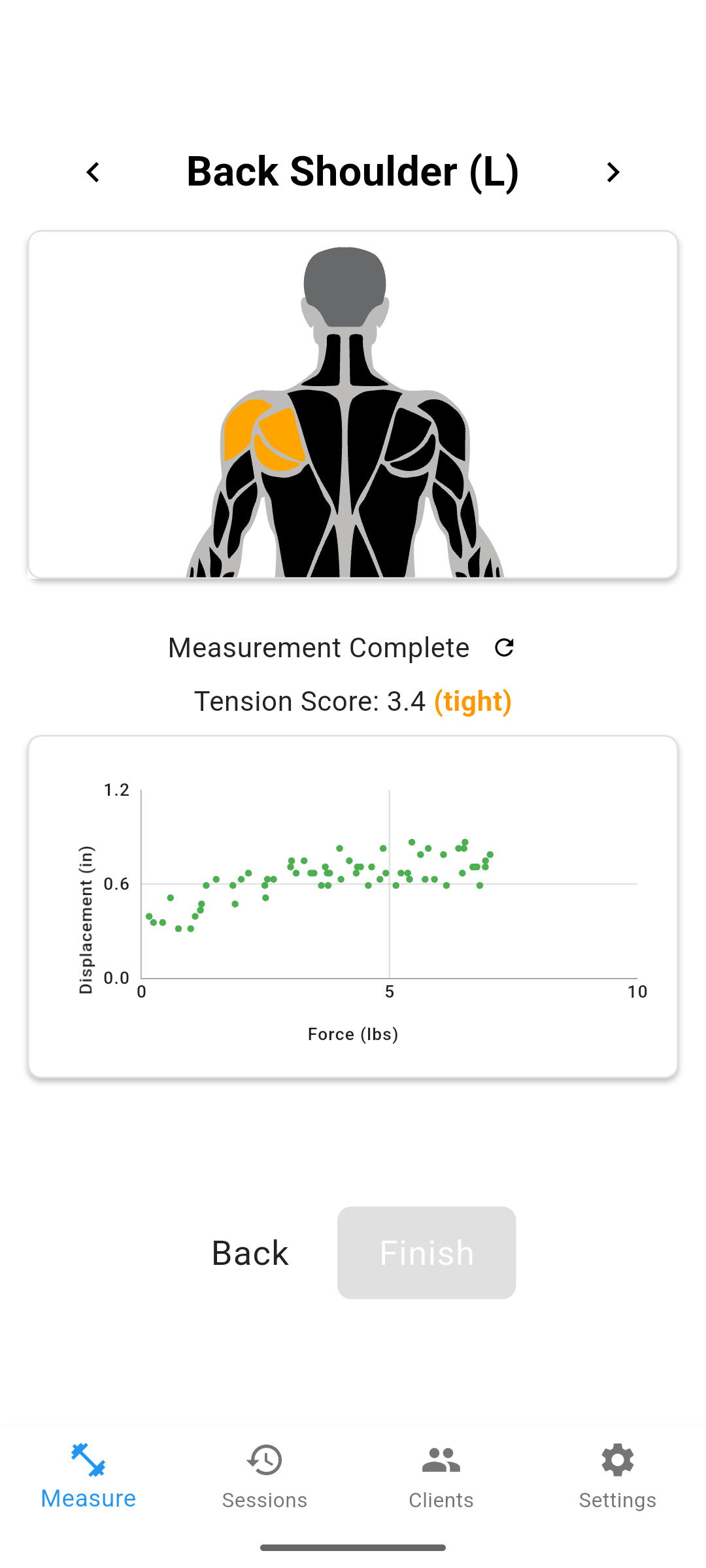
One approach is to add a second channel of objective data alongside subjective pain reports. Options include soft tissue stiffness measurement (such as MuscleMap), range-of-motion testing, and posture analysis. Each gives you something concrete to show the patient rather than asking them to take your word for it.